











The Difference between IP Cameras vs. HD-TVI Cameras

IP Cameras vs. HD-TVI Cameras – What’s the Difference and Which Is Better?
When you’re planning a new surveillance or remote monitoring system using CCTV cameras, you’ll quickly run into two main technologies: modern IP cameras and high-definition HD-TVI cameras. Storage is no longer the limiting factor it used to be—hard drives and NVRs/DVRs are larger and cheaper—so image quality, analytics, and ease of installation have become the real deciding factors. Today, IP and HD-TVI are the two dominant options for CCTV video systems in homes and businesses.
In this article, we’ll explain what each technology is, how they differ in cabling, power, image quality, and analytics, and when it makes sense to choose one over the other. The goal is not to crown a single winner for every situation, but to help you decide what’s best for your building, budget, and growth plans.
Quick definitions
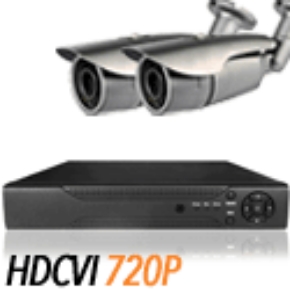
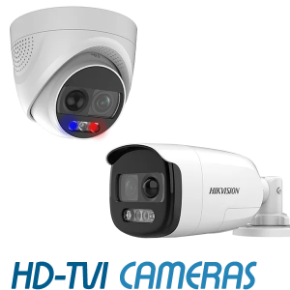
HD-TVI stands for High Definition Transport Video Interface. It’s a transport technology that sends high-definition analog video over traditional coaxial cable—often up to about 500 meters—without compressing the signal. :contentReference[oaicite:0]{index=0}
IP cameras are network devices that capture digital video and send it over standard Ethernet (CAT5/6) using Internet Protocol. They behave more like tiny specialized computers than old-school analog cameras, and can support high resolutions, encryption, and advanced analytics.
HD-TVI Cameras
HD-TVI was designed as an upgrade path for legacy analog CCTV systems. If a building is already wired with coaxial cable (RG59 or similar) or even CAT5 using baluns, HD-TVI allows you to keep most of that infrastructure and still step into HD video. Many systems can transmit 1080p and even 4K HD-TVI signals over existing coax, dramatically reducing labor and material costs for upgrades.
TVI cameras themselves are generally very affordable—often in the same price ballpark as the older 700-TVL analog models they were built to replace—but they produce true megapixel images. Depending on the camera and DVR, HD-TVI can support resolutions from 2MP up to 8MP or more, giving a huge bump in clarity over legacy analog without a huge bump in cost.
Another major advantage of HD-TVI is backward compatibility. Many TVI DVRs (Digital Video Recorders) can accept a mix of:
- Existing analog cameras
- New HD-TVI cameras
- A limited number of IP cameras (on some hybrid models)
That means you can upgrade your DVR and a handful of key cameras to HD now, and then gradually replace older cameras over time as budget allows—without ripping out and re-running all the cabling at once.
When HD-TVI shines
- Retrofits and upgrades where coax is already in place
- Cost-sensitive projects that still need 1080p or better video
- Simple systems that don’t require advanced analytics or heavy integration with IT infrastructure
IP Cameras
IP cameras take a different approach. Instead of sending an analog signal down a coax line, they digitize the video in the camera and send it over Ethernet using standard networking protocols. Most modern IP cameras are connected via CAT5/6 or better, often using structured cabling that’s already installed in newer buildings.
A key benefit is that IP systems can scale to very high resolutions—4MP, 8MP (4K), 12MP and beyond—while still supporting digital zoom and advanced compression (H.264/H.265). That extra detail is especially valuable when you need to read license plates, identify faces, or cover large areas with fewer cameras.
Power over Ethernet (PoE)
One of the most attractive features of IP surveillance is PoE (Power over Ethernet). With PoE, a single network cable supplies both power and data to the camera. No separate power supplies, no extra electrical runs—just one cable back to a PoE switch or PoE-enabled NVR. This simplifies installation, reduces points of failure, and makes it easier to move or add cameras later. :contentReference[oaicite:6]{index=6}
Because IP cameras are part of the network, it’s easy to place the NVR in a secure room and still view video from anywhere with appropriate authentication—onsite, across town, or from a mobile app. Modern IP systems typically include encryption, secure remote access, and granular user permissions for better cybersecurity.
Video analytics and “smart” surveillance
IP cameras also unlock powerful analytics that go far beyond simple motion detection. Many systems support:
- License plate recognition (LPR/ANPR)
- Face detection and facial recognition
- People counting and occupancy analytics
- Line-crossing and intrusion detection
- Object left/removed alerts
These features rely on the higher resolution and digital nature of IP video, and are often used in traffic monitoring, retail analytics, and high-security environments
When IP cameras are the right choice
- New construction or major remodels where structured cabling is already part of the plan
- Sites that need 4K or higher resolution and advanced digital zoom
- Organizations that want analytics, AI, and integration with access control, alarms, or other IT systems
- Multi-site deployments that benefit from centralized monitoring and management
Side-by-Side Comparison: IP vs. HD-TVI Cameras
The table below summarizes some of the most important differences between the two technologies.
| IP Cameras | HD-TVI Cameras | |
| Local setup | Require the NVR and cameras to share the same network so they can “see” each other. Cameras are addressed individually (by IP address) and discovered over the LAN. | Each camera connects directly to the DVR using coax or CAT5 with baluns. Configuration is usually simpler, but less flexible, and remote networking is handled by the DVR, not by individual cameras. |
| Power requirements | With PoE, a single Ethernet cable delivers both power and data. In many installations, all camera power is centralized at the PoE switch/NVR. | Typically need separate power supplies or Siamese cable (coax plus power). This can increase installation labor and make future changes a bit more involved. |
| Image quality | Commonly support resolutions from 1080p all the way up to 4K and beyond (8–12MP+), with strong digital zoom and modern compression (H.264/H.265). Best choice where fine detail is critical. | A huge upgrade over legacy analog, with many systems offering 1080p and 4K HD-TVI. For many small and mid-sized sites, this is “good enough” quality at a lower price point. |
| Remote access | Cameras and NVRs can be connected directly to the network and securely exposed for remote viewing through apps, VPNs, or cloud portals. | Cameras do not live on the network individually; all traffic goes through the DVR, which then provides remote access to the system as a whole. |
| Analytics & “smart” features | Most modern analytic and AI-driven features (LPR, face recognition, people counting, etc.) are designed for IP platforms and either run in the camera or on an NVR/video server. | Basic motion detection is common, but advanced analytics are rare and often require additional hardware or conversion to IP. |
| Cabling distance | Standard Ethernet runs are typically up to ~90m (about 300 ft) without extenders, though PoE repeaters and fiber can go much farther. | HD-TVI can transmit uncompressed HD video over coax up to around 500m, making it strong for very long single-run installations. |
| Hybrid / legacy support | Great for new systems and modern networks. Legacy analog cameras can be brought in via encoders, but that adds cost. | Many HD-TVI DVRs accept old analog cameras and new TVI cameras on the same recorder, making gradual upgrades easy and budget-friendly. |
| Cost | Cameras and NVRs generally cost more, especially at higher resolutions and with built-in analytics. Over time, operational savings and better coverage can offset the initial spend. | Typically the most cost-effective way to get HD video, particularly when reusing existing coax cabling and power infrastructure. |
So… Which Technology Should You Focus On?
If you had to pick one technology to invest in for the long term, IP would be the clear favorite. It scales almost without limit, supports the highest resolutions, integrates cleanly with IT systems, and unlocks advanced analytics and AI. For larger campuses, multi-site organizations, and security-critical environments, IP is usually the right strategic choice.
That said, it wouldn’t be fair—or budget-friendly—to ignore HD-TVI. For many homes, small businesses, warehouses, and parking lots that already have coax in place, HD-TVI delivers excellent HD video at a much lower installed cost. You avoid expensive re-cabling, you can keep some existing cameras running, and you still get a huge improvement over old analog systems.
A common path is:
- Stage 1: Upgrade to an HD-TVI hybrid DVR and replace the most critical analog cameras first.
- Stage 2: Continue swapping in HD-TVI cameras as older units fail or budgets allow.
- Stage 3: For new buildings, remote sites, or high-risk areas, deploy IP cameras with PoE and analytics.
Over time you end up with a smart mix of technologies, matched to the needs and budgets of each area rather than forcing a one-size-fits-all approach.
Key Questions to Ask Before You Decide
- Do you already have coax cabling? If yes, HD-TVI may dramatically reduce upgrade costs.
- How important is ultra-high resolution? If you need crystal-clear faces and plates, IP is usually best.
- Do you need analytics or AI features? IP wins here almost every time.
- What’s your long-term growth plan? Rapid expansion, multi-site, or IT integration all favor IP.
- How tight is the current budget? For phased upgrades, HD-TVI can be an excellent first step.
Still Not Sure? Talk to Our
Even with all this information, it’s normal to still have questions: Will my existing cabling work? Can I mix camera types? How much bandwidth do I really need for remote access? Reach out to us and we would be more than happy to answer those questions.
Our team can review your current setup, discuss your goals, and design a system that balances image quality, cost, and future-proofing—whether that means all-IP, all HD-TVI, or a smart hybrid of both.
Have a suggestion for our next article or need help planning your next surveillance project? Reach out to us by calling (832) 266-2444 or contacting us online at Veotron Technologies we are always happy to answer your questions or walk you through your options.